
27
2026
-
08
Smart Manufacturing: How Digitalization Is Reshaping Webbing Factories
Author:
Introduction
As "lights-out factories" and "digital twins" appear more often in textile industry reports, the webbing sector is reaching an inflection point in smart manufacturing. From automatic warping and online quality inspection to fully digital order management, smart weaving is reshaping delivery capability and cost structures across the industry.
1. Industry Update: The Digital Transformation Path for Webbing Plants
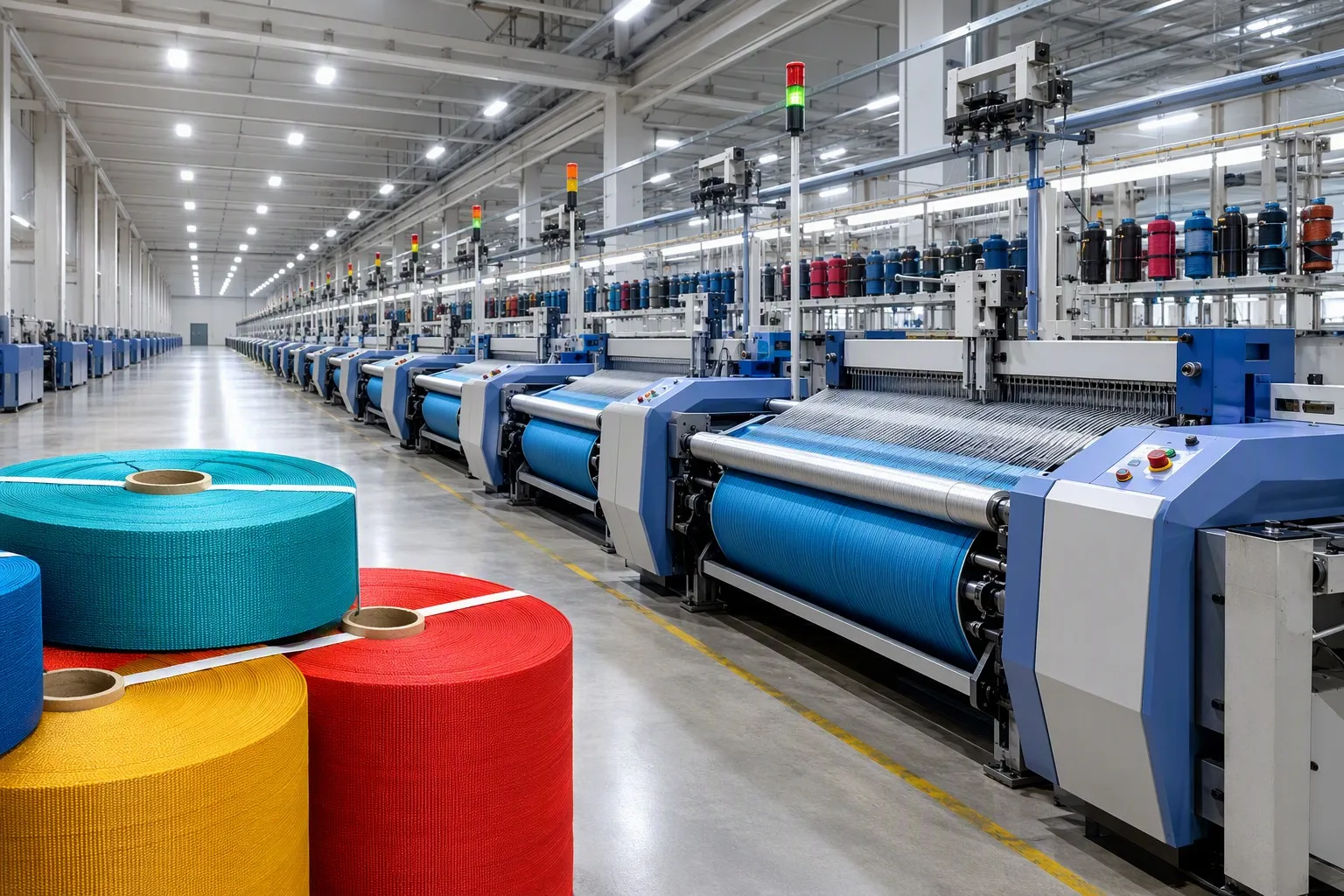
In the past, webbing production relied heavily on experienced operators — loom tuning, yarn inspection and fabric checking were done by hand and feel. Today, modern plants adopt high-speed computerized looms and automated equipment, multiplying per-machine efficiency. Online tension monitoring and vision-based inspection move quality control from sampling to full inspection, while ERP and production management systems connect orders, scheduling and inventory — turning "about two weeks" into delivery dates accurate to the day.
2. Three Benefits for Buyers
- More reliable lead times: digital scheduling reduces disruptions, making bulk delivery measurable and traceable
- More consistent quality: online inspection and batch tracing make color, density and strength reproducible every time
- Faster sampling: computerized jacquard programming and color systems shorten development cycles and make small trial orders flexible
3. How to Assess a Plant's "Smart Maturity"
Check the equipment (high-speed automatic looms), the systems (digital scheduling and inspection records) and the data (batch tracing and quality reports). We recommend a physical factory audit focusing on automation in dyeing and weaving, and on how the quality management system actually works on the floor.
4. YUNGLUNG Webbing: Over 500 Looms for Capacity and Quality
Founded in 1995, YUNGLUNG Webbing (Huizhou) Co., Ltd. operates more than 500 looms with a daily output exceeding one million yards, covering dyeing, weaving, finishing and inspection in-house under an ISO 9001 quality management system. Whether it is large-volume reorders or rapid sampling, we deliver stable quality on schedule. Factory visits are welcome.
Previous Page
Previous Page
27
2026-08
Green Transformation: GRS Recycled Materials Become the New Standard for Export
27
2026-08
Gradient and Multi-Color Webbing on the Rise: Customization Leads the Trend
27
2026-08
The Pet Economy Is Heating Up — A New Growth Point for Webbing
27
2026-08
Anti-Slip Webbing Explained: Latex Yarn, Drip-Coating and Woven-in Structures
19
2026-08
Subscribe and get news


Contact Information
Yonglong Weaving (Huizhou) Co., Ltd.
Address: Changbu Village, Xinwei Town, Huiyang District, Huizhou City, Guangdong Province
Telephone:13829905177Chen Sheng Phone:13631502993Miss Liu
Fax: 0752-3521132
E-mail:info1@yunglung.com
Enterprise website:www.yunglung.com
Focus on us

WeChat Public Number
Copyright©2024 Yonglong Weaving (Huizhou) Co., Ltd.